
3 Things You Think You Know about POV
By Paula Martinac
 Let me start by quoting a couple of craft mavens:
- “There’s no more important decision a writer makes than who tells the story.” —Christopher Castellani, The Art of Perspective
- “Point of view is the most complex element of fiction.” — Janet Burroway, Writing Fiction
Do these statements surprise you? Are you’re thinking, “Lighten up! Point of view is all about pronouns — just pick one”?
I’ve had a lot of students over the years who thought exactly that, but it’s Misperception #1. Pronouns are only a piece of point of view, or POV. In fact, Burroway has identified four interconnected choices a prose writer has to consider: who speaks, to whom, in what form, and at what distance.
Maybe you’re already starting to doubt me — and Burroway. “I’ll just pick first person,” you decide, quietly, so no one hears. “That’s the easiest. You can’t go wrong with me, myself, and I.”
Which leads to Misperception #2. Sorry, but first person isn’t easy. You’ll notice that in writing this post, I’ve used first person singular — a common one for essays and blog posts, but not the only good choice. Next, I’ve chosen to address “you,” Charlotte Lit’s friends and members, as my audience, and then I’ve decreased the distance between us with a chatty persona. Finally, I’ve opted for a list format. If this post is successful — meaning, you make it to the end — it may seem as if I just sat down and started writing. In fact, I sweated over how to tell the story of an often misunderstood craft element.
And there’s even more to first person. Did you know, for example, it has multiple varieties and each one accomplishes something different? Here’s something to further confound you: John Dufresne, another craft maven, makes the claim that “all first-person narrators are unreliable.” Including, for sure, the one addressing you here. After all, this post only includes three things you thought you knew about POV. Are there others and for what nefarious reasons have they been left out?
Now you’re wrinkling your brow and deciding to opt for third person omniscient because surely that’s an easy one. You’ll just jump impartially from character to character and never think about varieties or audience or unreliability.
[Buzzer sound.] Misperception #3. What you’re considering is called head-hopping, and it’s commonly mistaken for true omniscience. Head-hopping will give your reader a bad case of whiplash as you jerk from Rita to Rodney to Wren, possibly in the same paragraph. In contrast, third person omniscient, done well, will disappear. It’s a difficult point of view to pull off, especially for newer writers, but it can be done if you set it up at the beginning and stay consistent.
So, I’ve left out a bunch of misperceptions about POV, but I swear I’m not unreliable, just over my word limit. Whether you’re writing fiction, nonfiction, or poetry, point of view can be high maintenance, but it’s way past time to give it some respect.
Finally Figure Out Point of View with Paula
TWO THURSDAYS, NOVEMBER 13 & 20: “Who’s Telling This Story? Mastering Point of View,” with Paula Martinac. 6:00–8:00 p.m., virtual via Zoom. Info and registration
When choosing a point of view, writers of fiction, nonfiction and poetry alike often stay within their comfort zone, and in doing so limit the impact of their work. Each POV “person” — first, second, and third — offers several variations, and each has its strengths and limitations. This class will sift through the different types of point of view, exploring successful and innovative examples of each. Through prompts, we’ll experiment with perspectives we may not have considered that might better suit our stories, essays and poems. By making a more conscious choice about POV, writers learn to enrich their work for a more powerful reader experience.
Members save $30 on this class. Log in as a member or join to receive the discount.
Thanks to generous donors, limited need-based scholarships are available for all our classes: https://charlottelit.org/scholarships/
About Paula
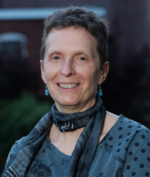
Paula Martinac is the award-winning author of seven novels and three nonfiction books. Her short stories and essays have been published in Raleigh Review, Main Street Rag, Minerva Rising, Hippocampus, Art & Understanding, and other places. She has received fellowships and grants from the Arts & Science Council, the North Carolina Arts Council, the Modern Language Association, and the Historical Novel Society, and was the recipient of the 2023 William F. Deeck-Malice Domestic Grant for an unpublished mystery novel. In 2020, she was inducted into the Saints & Sinners Hall of Fame, which recognizes individuals for their dedication to LGBTQ+ literature. Paula taught fiction writing at UNC Charlotte from 2015 to 2024. In addition to working as Charlotte Lit’s Community Coordinator, she is a freelance developmental editor and writing coach.

